

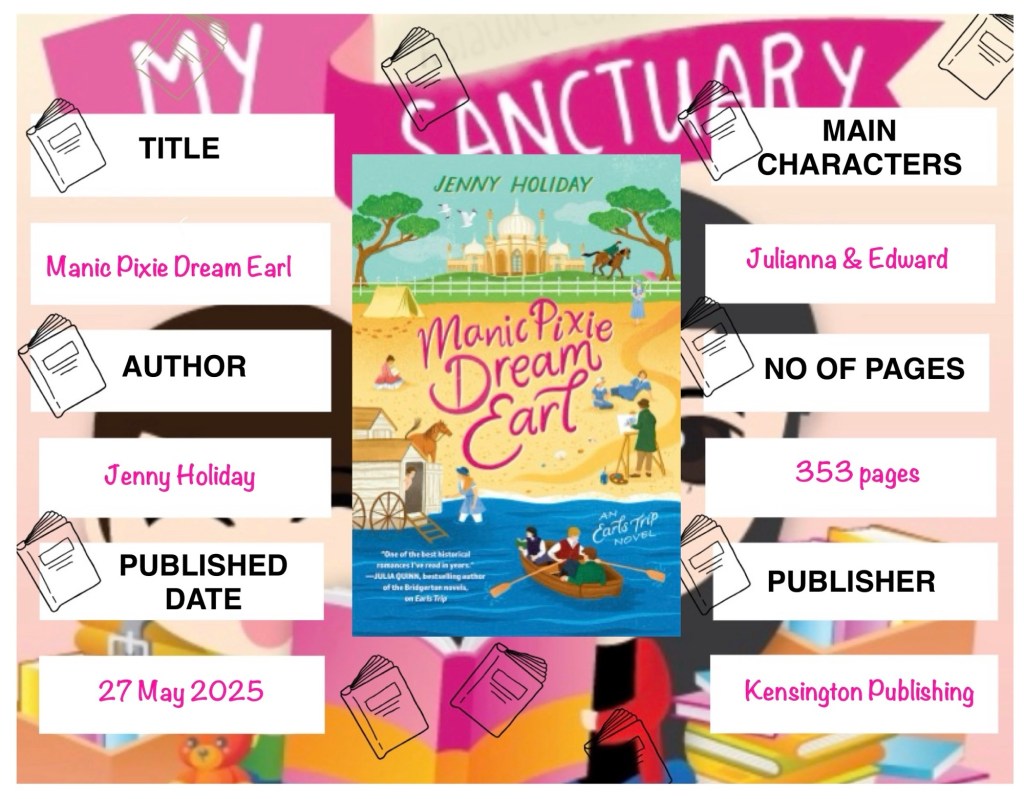
When not writing, poet Edward Astley, Viscount Featherfinch, spends his time fending off the young ladies of the ton—and some of its young men—and avoiding his cruel father. As heir to the earldom, Edward knows he must marry someday. Alas, he is already hopelessly in love with someone. Hopeless because not only is Miss Julianna Evans not a member of the aristocracy, she is employed. She is a magazine editor—the only one to publish his work. Also, in all their years of increasingly personal correspondence, they’ve never met.
Also, she thinks he’s a woman. Named Euphemia.
Julianna is baffled. How can her soul mate not want to meet? Could it be that Euphemia is not the simple country girl she claims to be? Perhaps she’s wealthy. After all, she’s never cashed any of the bank drafts Julianna has sent. Perhaps Euphemia simply doesn’t want rank to come between them. Well, no more. Having extracted the details of a trip Euphemia is planning, Julianna squanders her meager savings and surprises her at the scene.
He is very, very surprised. As is she.
Now the two will have to decide what is true, what is not, and whether the truest thing of all—love—just might be worth an earldom . . .
About The Author

My Review
The novel follows Edward Astley, Viscount Featherfinch, a gentle, eccentric poet hiding from high society, his cruel father, and the pressure of his title. Under the pseudonym “Euphemia,” he’s been secretly publishing poetry through a women’s magazine edited by Julianna Evans—his pen pal of many years and the woman he’s quietly fallen for. The only problem? Julianna thinks “Euphemia” is a woman.
When Julianna decides to meet her mysterious contributor in person, she discovers the truth in spectacular fashion. The reveal sets off a beautifully complex story of class differences, personal trauma, identity, and the risks we take for love. Edward is a standout hero—sweet, strange, and deeply lovable. His voice is so strong that his chapters shine particularly brightly. While Julianna is admirable in her ambition and determination, her actions during the third-act breakup may divide readers.
Despite moments where the story slows (especially when side characters take center stage), the romance remains compelling and emotionally sincere. Their connection, built through years of letter-writing, gives the relationship a rare emotional foundation that makes the eventual romance feel earned and believable.
Manic Pixie Dream Earl is a refreshingly original Regency romance that blends humor, emotional depth, and a clever twist on the epistolary trope. The author delivers a story that’s both heartwarming and offbeat, with characters who feel both modern and grounded in their historical setting. The author handles difficult themes such as childhood trauma, grief, and emotional abuse with sensitivity, adding weight to what could have been a purely light-hearted romance.
My Rating

Link To Purchase


 My Sanctuary